Notes on The Prisoner

Freedom is…

When №6 is dropped in a location called The Village it is not hard to think of Marshall McLuhan’s concept of the Global Village coined in 1962. With every society there is an expectation of conformity so the idea of a global society signals a high degree conformity across a monoculture. McLuhan argued that the diversity inherent in Global Village would protect it from any mass conformity saying, “The global village absolutely insures maximum disagreement on all points…A world where people encounter each other in-depth.”(1) The Prisoner seems to question this from the very start creating a location which is highly globalized, but also completely conformist. This theme of globalism is stated explicitly in “The Chimes of Big Ben”:

№2: It doesn’t matter which side runs The Village.

№6: It’s run by one side.

№2: But both sides are becoming identical. What has been created is an international community, a perfect blueprint for world order. When both sides facing each other suddenly realize they are looking into a mirror they will see that this is the pattern for the future.

№6: The whole earth as The Village?

In the context of 1967 the sides referred to here would have definitely been referring to the sides of the cold war. Predicting the exact US domination which would take off following the fall of the berlin wall. In an alternate edit of “The Chimes of Big Ben” there is a version of the closing credits where the wheels of the completed penny farthing bicycle turn into the world.
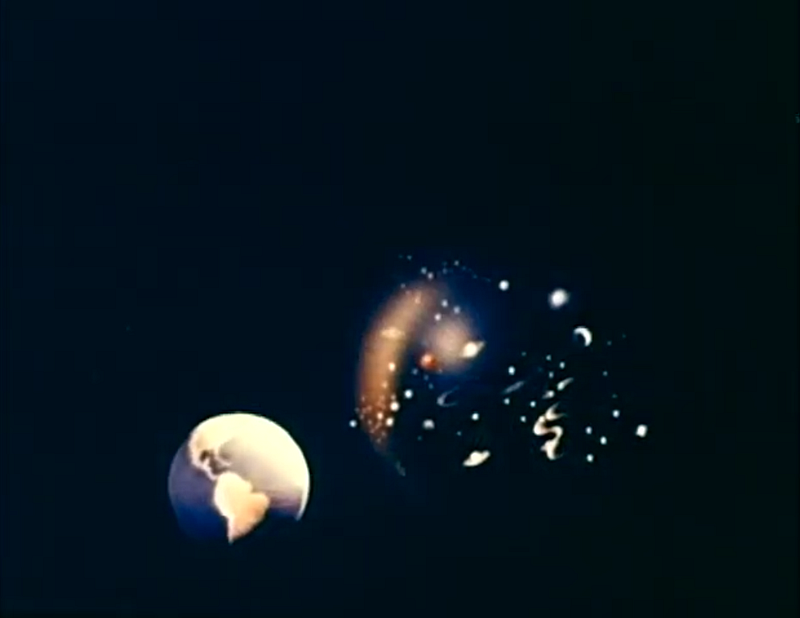
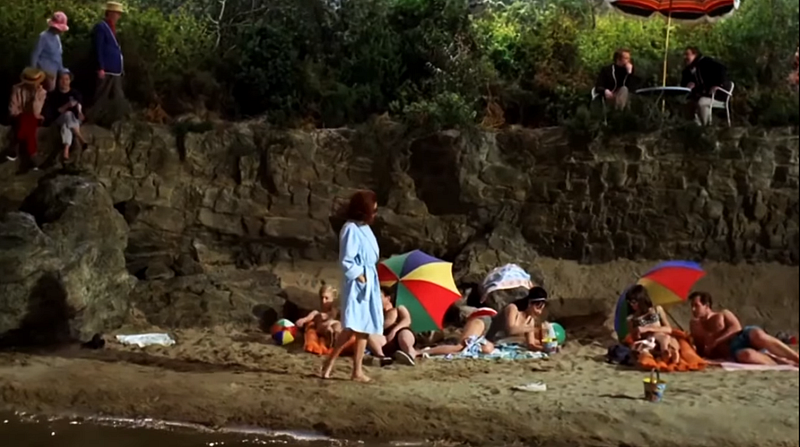
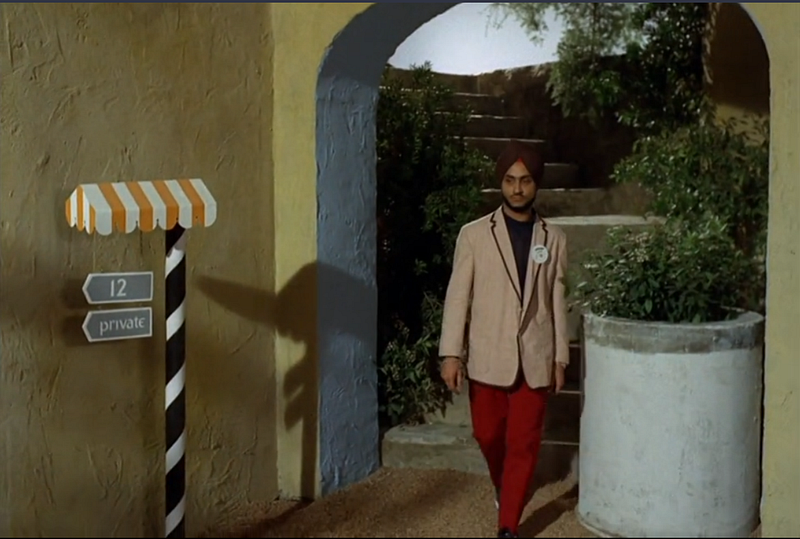
This theme is also expressed in the human makeup of The Village which is made up not only of people from a variety of backgrounds (the only condition for entry being you “knew too much” at some time), but also from many nationalities. In “The Chimes of Big Ben” an Eastern European woman named Nada plays a large plot in the story. In “Free for All” Number 58 speaks a fictionalized Scandinavian language. In “The Schizoid Man”, an Indian man can be seen greeting Number 12/6 along with a Haitian man playing the role of supervisor:

Number Two : It’s uncanny. Number Twelve has caught the man’s whole style.

Supervisor : In Haiti we’d say he’s stolen his soul.

In the episode “A Change of Mind” and east Asian man takes part in the social group which shames and ostracizes №6. Interestingly all three places: Haiti, east Asia, and India were all colonized by the British at one point hinting at colonialism being the original sin of globalization.
The politics of The Village also relate to this theme. The Village is ostensibly undemocratic either being run by an autocrat, №1, or by an oligarchical committee, yet the leaders frequently refer to the structure as democratic. In “Free for All” there is a sham election, while in both “Dance of the Dead” and “Its Your Funeral” the respective №2s refer to The Village as a democracy; in particular the №2 of “Dance of Dead” frames №6’s crimes as assault on democracy itself. №6 even calls The Village a democracy himself in “Many Happy Returns”. There are also many different committees throughout the different episodes which hold different degrees of power. When faced with the election committee of dummies in “Free for All” №6 asks:

Who do you represent?

Who elected you?

To what nation or country do you owe allegiance?

Whose side are you on?

This farce, this 20th century Bastille that pretends to be a pocket democracy!

Why don’t you put us into solitary confinement to get what you’re after and have done with it?

This reflects a critique of bureaucracy and international political organizations. That due to their lack of direct election and generally obscure nature they exist primarily to siphon political power away from actual citizens.
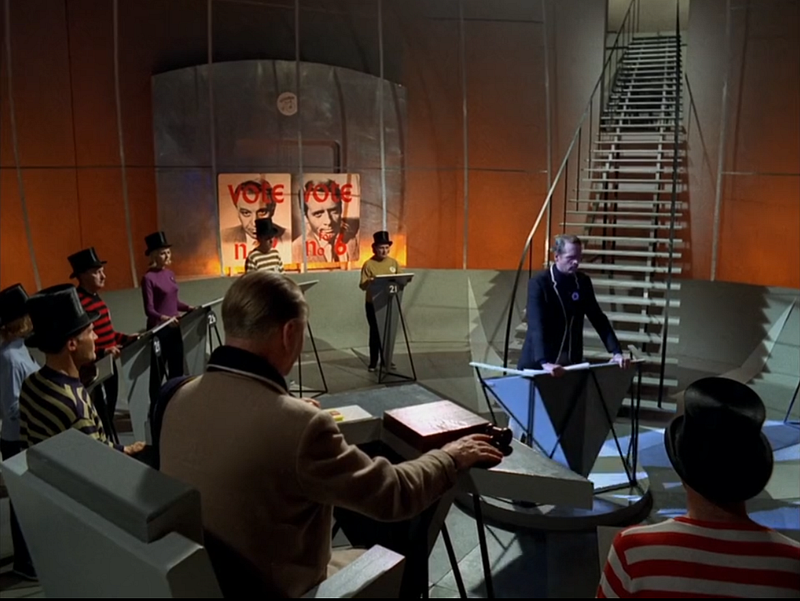
Even №2, who is the executive official of The Village, never seems to have a clear role. In “Its Your Funeral” its stated that every №2 seen previously was simply an interim for the old №2, but in other episodes №2s seem to be recruited deliberately to break №6. In both “A, B, or C” and “Hammer Into Anvil” №2’s job security seems to be based on his ability to extract information from №6. This inconsistency is used to The Village’s advantage in “A Change of Mind” where a key part of №2’s plan involves him obfuscating his relationship with the social committee.
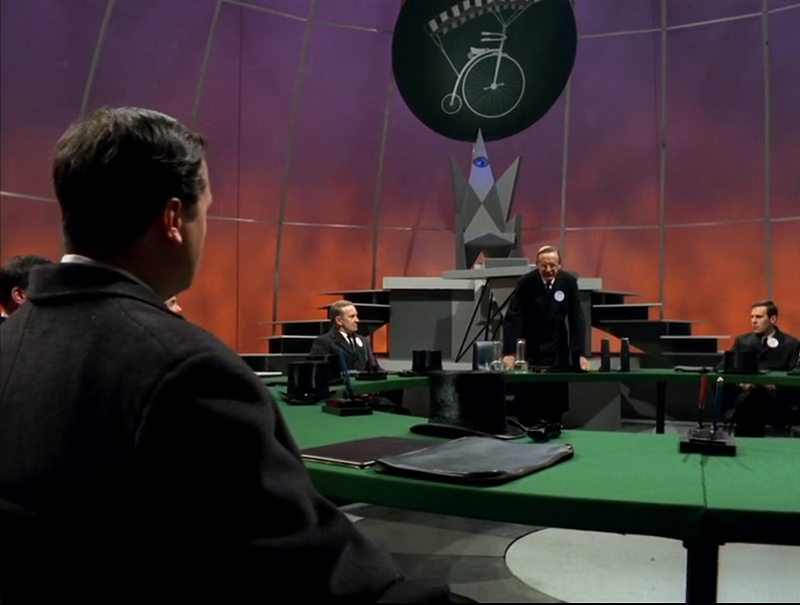
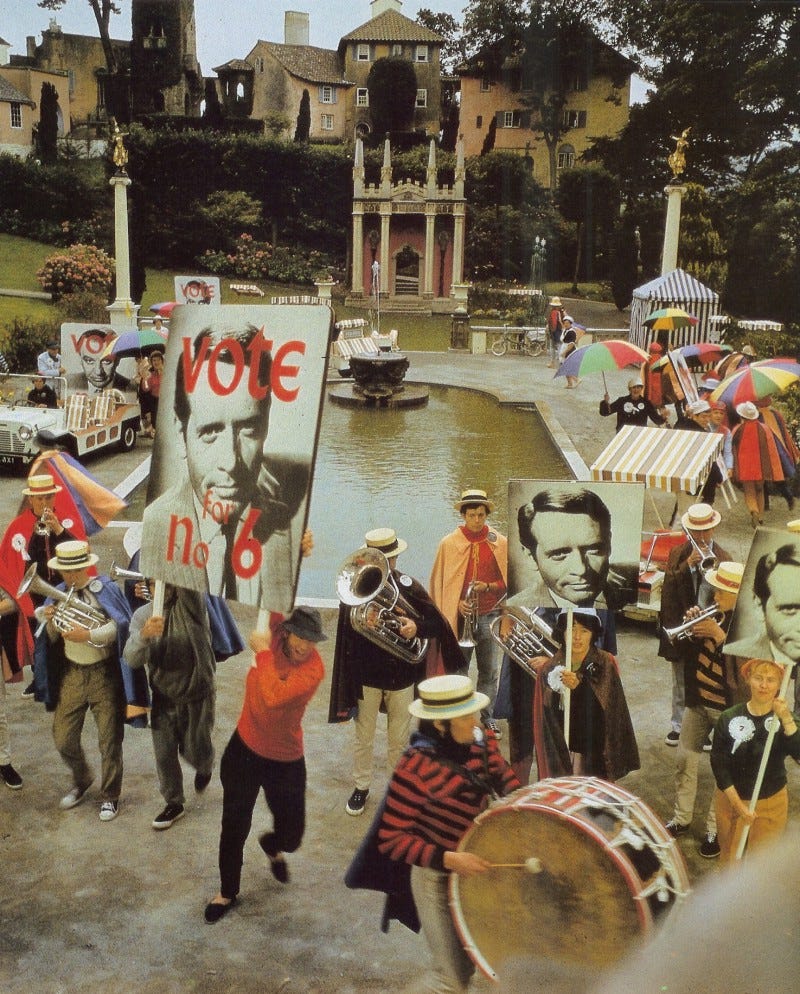
Beyond trying to escape, №6 and other prisoners of The Village also attempt various political strategies in an attempt to overthrow The Village. In “Free for All” №6 tries change the system from within by utilizing a populist political campaign with bold promises and catchy slogans:

They say, “Six of one and half a dozen of the other.” Not here. It’s Six for Two and Two for nothing, and Six for free for all for free for all! Vote! Vote!
In “Checkmate” №6 tries to make a revolutionary force out of the oppressed and meek of village. This ultimately fails when their own weakness causes them to rat №6 to the authorities fearing he is a village spy. “Its your Funeral” explores the dichotomy between violent and non-violent revolution. The “jammers” — interestingly the term “culture jamming” wouldn’t be coined until the 80s — simply discuss ideas for revolt they will never implement knowing that The Village will waste resources investigating it anyway. They justify their relative in-action by energy The Village will waste investigating false leads, but by the time №6 learns of this The Village has already registered all known jammers and simply ignores them. In contrast to this there is the watchmaker who plans to assassinate an old №2. Ultimately the clockmaker knows his actions will not impact the political structure of The Village much, and even agrees with №6 that this action will only cause The Village to crackdown more on all citizens, but argues that this will eventually inspire a mass revolt in The Village. It is later revealed that the watchmaker was being groomed by village agents to commit terrorism to both take out a retired №2 and serve as a false flag attack to justify any number of unknown measures.
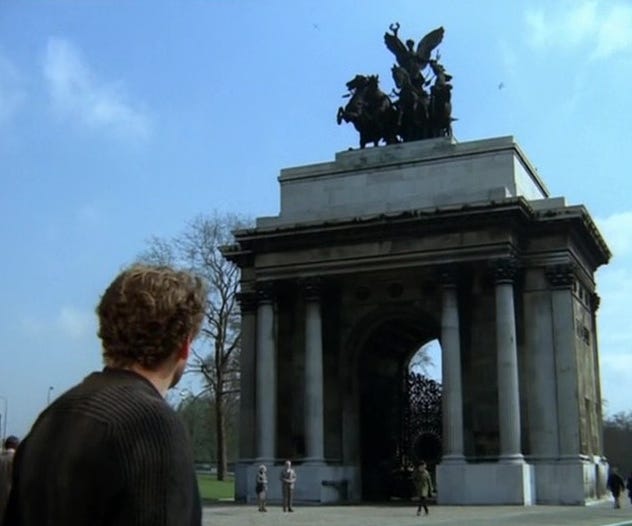
A more subtle detail within all of this is the surface level banality of The Village politics. On its surface and in the everyday lives of its citizens The Village is quite similar to a liberal democracy with elections, newspapers, public service posters, and a string of festivals and art shows. The leaders focus on public works like improving education and partition tasks to an endless stream of committees. The politicians blab on about vagaries like imports, exports, internal security, public works projects, and infrastructure. Most assumingly in “Its your Funeral” The Village holds a holiday and ceremony in honor of its brave public servants and how much they care about the community ending in the unveiling of a monument to “achievement”.
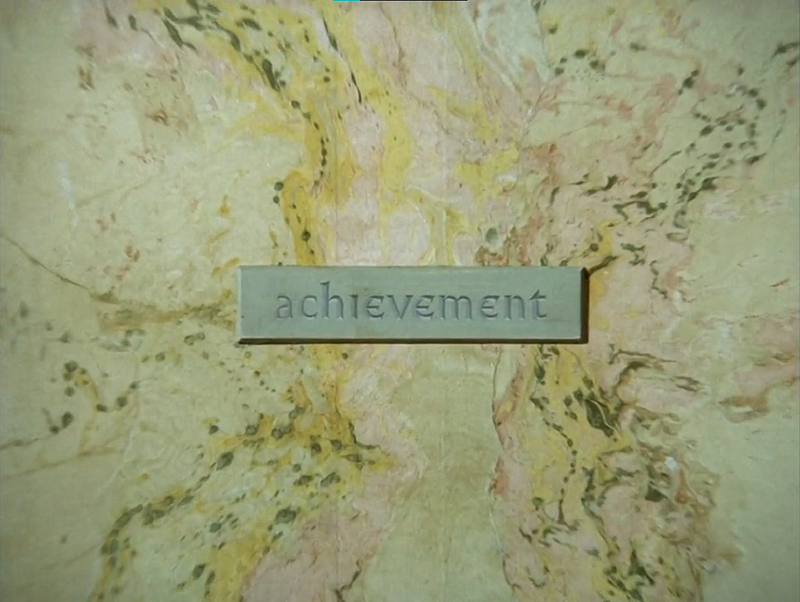
The village rarely is shown in a way to visually connect it to the commonly known authoritarian states such as Nazi Germany or the USSR; it is bright, cheery, impotent, egalitarian, and most of all polite. Even in its invasive medical and psychological practices The Village maintains the same tones as our publications which extol toe virtues of the latest drugs and techniques in reducing depressing, disagreeability, anger, fear, and other anti-social behaviors.
№6 is a very traditional hero. In his demeanor he reminds me of H. I. Marrou’s description of the Homeric hero (2):

The moral ideal was rather complicated. There is first of all the “cunning” type of person, whom we find a little embarrassing — … exemplified in the — to us — ambiguous figure of a Levantine adventurer — as Ulysses sometimes appears in the Odyssey. Here, as I have already pointed out, the good manners and savoir-faire of the Homeric hero meet the practical wisdom of the oriental scribe: the result is the art of knowing how to get out of any awkward situation! Our conscience, refined by centuries of Christianity, sometimes feels a slight uneasiness about this — think how complaisant Athena is, for example, when one of her dear Ulysses’ lies turns out to be particularly successful.

Fortunately this is not the most important thing. It is not the Ulysses of the Return but the pure and noble figure of Achilles who embodies the moral ideal of the perfect Homeric knight. This ideal can be defined in one phrase: it was an heroic morality of honour. Homer was the source, and in Homer each succeeding generation of antiquity rediscovered the thing that is absolutely fundamental to this whole aristocratic ethic: the love of glory.
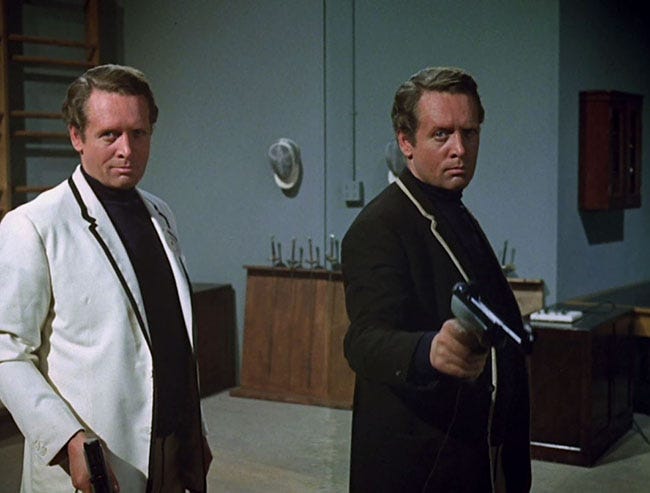
№6 is a hero driven by his commitment to his belief in his right to be an individual and believes there is honor in doing so. He is willing to lie and act subterfuge in order to get the upper hand on his captors, and is frequently prone to lashing out at other villagers. Even in his design he is abnormal, in most episodes wearing a black suit with a white outline. While in “The Schizoid Man” his evil doppelganger wears a white suit with a black outline: reversing the traditional symbolism of light and dark. Despite all this he also shows a keen sense of justice such as when he punishes the sadistic №2 in “Hammer into Anvil” — recalling Batman’s torment of his parents killer, Joe Chill, in Batman (1948) #47 — or when he frees the ex-№2 in “Its your Funeral”. Even in his attempted escape to London in “Many Happy Returns” №6 first goal is to use the UK government to free The Village. №6 fits the Nietzschean definition of a great man, a man out of time. He seems to come from a nobler age with a keen sense of mind which allows him to triumph, while the other villagers “rot like cabbages”.
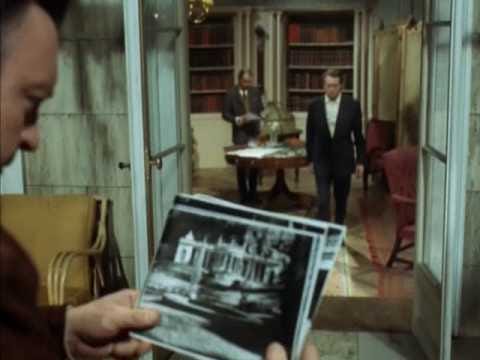
One of the greatest ironies in the show is that, while its tagline is “I am not a number! I am a free man!”, №6 is only known to the audience as a number. In most modern media the protagonist is an open book to the audience as a form of trust. If a protagonist is going to have a secret they must have amnesia or otherwise not be able to remember that secret as to not break that trust — something the 2009 Prisoner remake wholeheartedly committed too. The audience only learns brief snippets of №6’s life in: “A, B, or C”, “Many Happy Returns”, and “Do Not Forsake Me Oh My Darling”. Even this information, such as №6’s stated name in “Many Happy Returns”, is highly suspect and may just be more false flags meant to lead his captors astray. Just as №6 hides from his captors he hides from the audience. This begs the question of what №6 is hiding. The crux of the show is that №6 was a former secret agent, a profession where one is reduced to a numbered code name and expected to do what your country orders without question. Is №6’s rebellion some sort of atonement for his past actions?
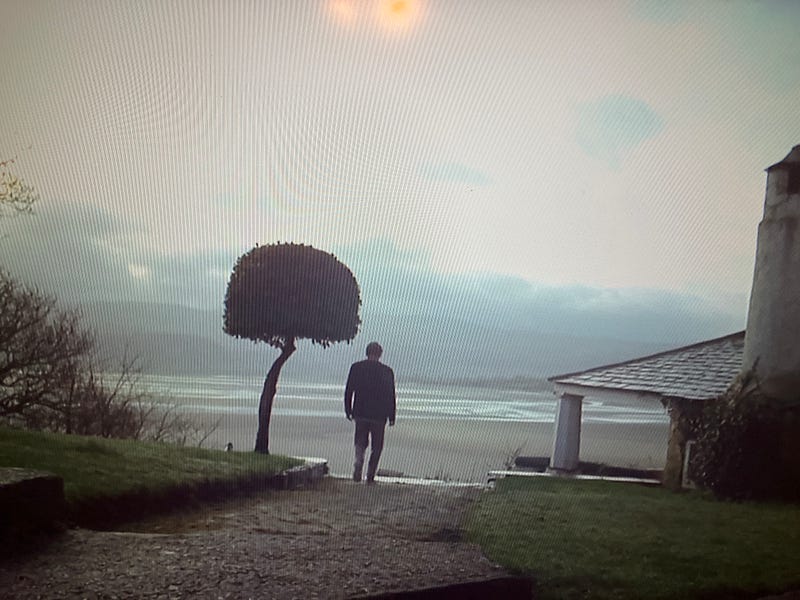
By the time the series finale roles around №6’s role shifts to a far more tragic hero. “Fall Out” is one of the most openly pessimistic episodes of TV and one that actively subverts, not only its main character, but also the system of values he represents. It is pure televised anarchy which removes any pretense of plot and lore leaving only pure allegory.
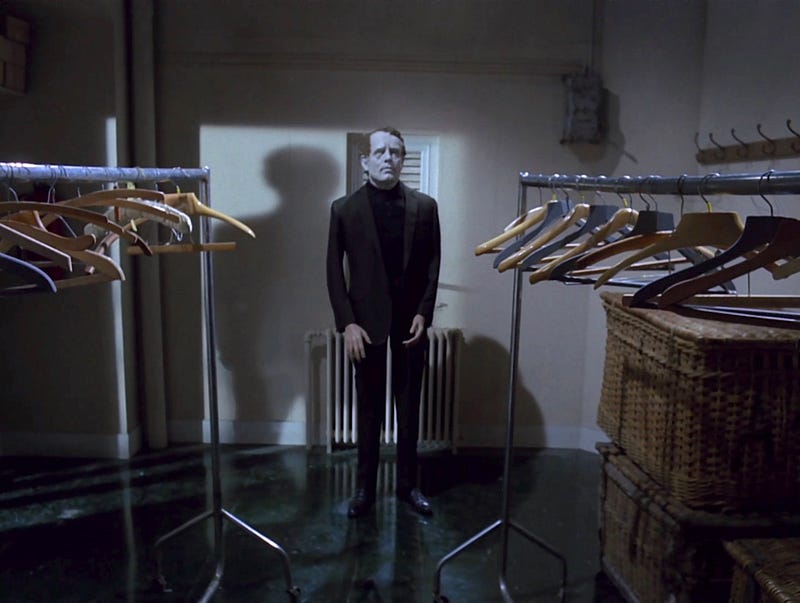
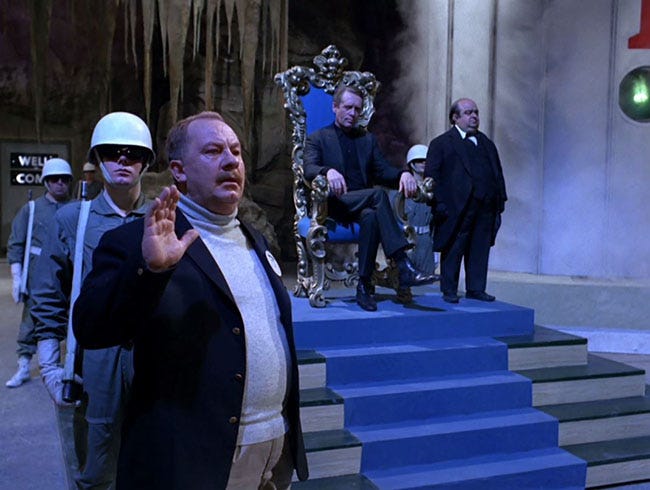
Unlike past episodes where The Village was actively at odds with №6, here №6 is praised as the last true individual. An Übermensch who is now fit to lead The Village and create a new law table for the masses to follow. №6 is first met with two examples of failed revolutionaries: “The Kid” whose youthful rebellion is restricted to fits and spurts of nonsense until he is caught, and №2 who tries to bite the hand that feeds but is too meek for genuine rebellion. The jury is made up of masked men who sit behind placards for various concepts: “Welfare”, “Activists”, “Defectors”, “Reactionists”, “Nationalists”, “Security”, and “Pacifists”. №6, the individual stands above these values on a podium.
The most famous twist of this episode is the reveal that №1 is actually №6 — the crazed №6 doppelgänger being decades before the similar doppelgänger in the Twin Peaks Finale. In one sense it shows the duality between the individual and society. Since №6 is the supreme individual he can ascend from society and enforce his own law table becoming a №1 of The Village. Then this will create a new herd for a new supreme individual to rise up from and so on and do forth. In other sense it also points to dark side of the self which also doubles as the jailer. Within everyone, even the hero, there is an evil and for every man this is the ultimate evil he has to face. Or as Patrick McGoohan puts it (3):

Number One was depicted as an evil, governing force in this Village. So, who is this Number One? We just see the Number Two’s, the sidekicks. Now this overriding, evil force is at its most powerful within ourselves and we have constantly to fight it, I think, and that is why I made Number One an image of Number Six. His other half, his alter ego.

The ending of “Fallout” takes the irony one step further. As pop music and the upbeat “Rag March” play we seemingly see №6, The Butler, The Kid, and №2 escape into London, but there are 3 major clues that everything isn’t as it seems. Clue number one: the door into №6’s house that The Butler walks in opens automatically like the ones in The Village.
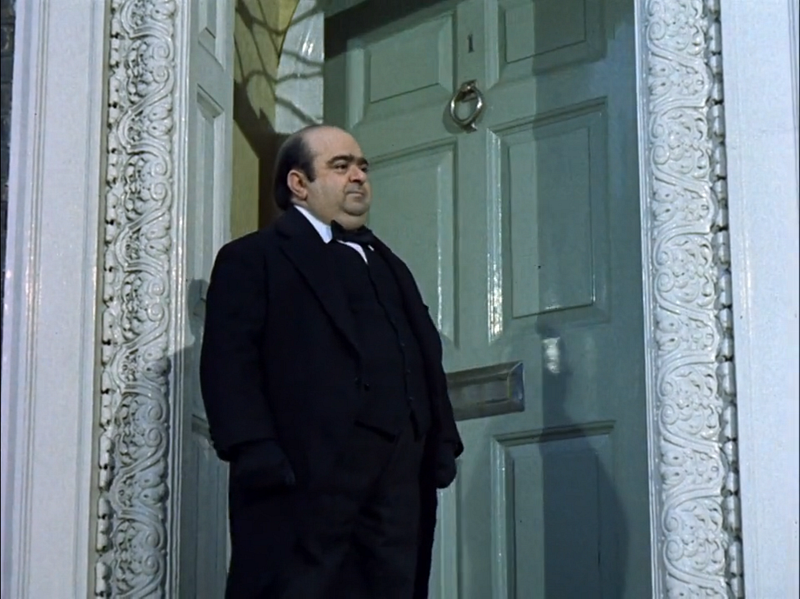
Clue number two: when every character has their actors name appear on screen №6 is not credited as Patrick McGoohan, but instead as prisoner.
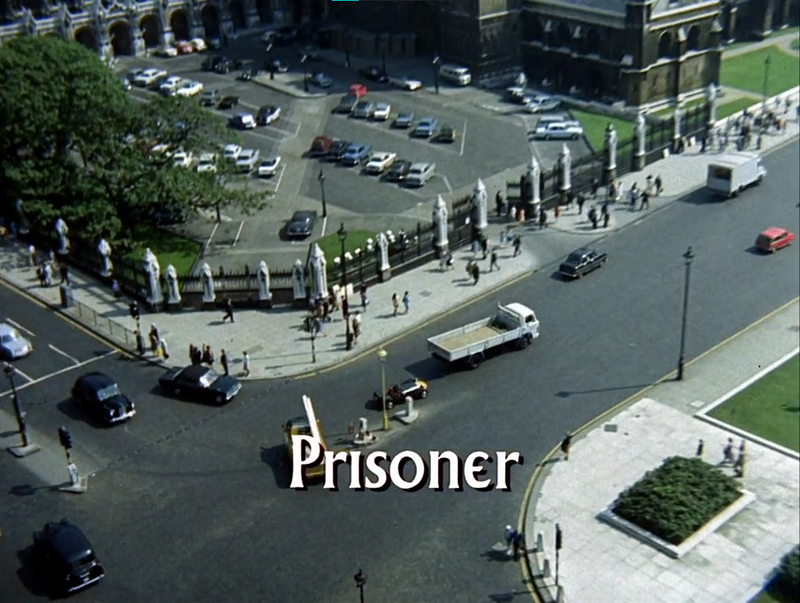
Clue number three: the closing shot of №6 driving towards the camera is identical to the one which starts the intro.

All three of these point to one simple fact. №6 has not escaped The Village, as stated in “The Chimes of Big Ben” the whole world is The Village. This is confirmed by McGoohan in an interview(3):

He [The Prisoner] just wants to get out and he uses a technique which he hasn’t used before that: which is violence. Which is sad, but he does and that’s how he gets out and then of course in the final episode he goes back to his little apartment place and he has his little valet guy willing and the door opens on its own. He goes in and the cars there so that you know it’s gonna start all over again because we continue to be prisoners…

He [The Prisoner] hasn’t caught it ,which is the whole point. When that door opens on its own there’s no one behind him; exactly the same as all the doors in The Village open you know, but somebody’s waiting in there to start it all over again. He’s got no freedom, freedom is a myth. There’s no final conclusion to it.

McGoohan continues in this interview (3):

McGoohan: I think progress is the biggest enemy on earth besides oneself

Interviewer: Do you think there will be a popular reaction against progress in the future?

McGoohan: No, because we’re run by the Pentagon, we’re run by Madison avenue, we’re run by TV, and as long as we accept those things and don’t revolt we have to go along with the stream to the eventual Avalanche

This is the true message of The Prisoner, that society will always be a prison and now the whole world is one big global village with every man as his own warden. Everything is observed, managed, innovated, and algorithmiztized by the top minds of the world. We are all numbers in a big data bank sitting in a bomb proof bunker. If we all stood up it would end, but a man can’t truly revolt until he conquers himself, and one man can’t do much on his own. The conflict between the individual and the collective is one of those dualities of the human condition which can never be solved, but in recent times the progress — technological and social — has allowed for unprecedented levels of control and conditioning. If freedom is a myth then what does it say when Man thinks he is free? The tools today’s states and organizations have are the kind of things which would make any autocrat of the past blush; what’s stopping them from using it? This is the pessimism which underlies The Prisoner and gives it a texture unique to TV. If №6 can’t find freedom what does that mean for you or me? What else is there to do other then wait for the precocious singularity when the data banks get to full and the analysis gets too complex and the system shrugs for just one moment and the sudden shock of freedom as the system which held us together falls apart and the bombs and the planes and then, the POP!


  1. McLuhan: Hot and Cool Edited by Gerald Emanuel Stearn Published by Signet books (1969) Chapter 6 “A Dialog Q & A” pg. 272
  2. A History of Education in Antiquity by H.I Marrou Translated by George Lamb Published by Mentor books (1964) Chapter “Education in Homeric Times” Subtitle “The Homeric Epic” pg. 31
  3. “The Prisoner Puzzle” with Patrick McGoohan and Warner Troyer Distributed by Ontario Educational Communications Authority (OECA) and TVO (1977) https://archive.org/details/the-prisoner-puzzle

A Message to the Truckers Freedom Convey

You don’t know it yet, but you’ve already lost

Stop if you’ve heard this one before, so there is this guy who thinks he’s smart and he has something to say. He goes out in front of the crowd and starts speaking truth to power and… well you already know the rest, I mean Benjamin Dichter isn’t a dumb guy (this message was supposedly crafted by the we in the Freedom Convoy, but since this draft committee is so vague I will use Dichter as the representative). Notice his arguments against COVID mandates doesn’t rely on data or science, nor does he get overly emotive. He knows this is a frame game and wants to look rational. His argument is one of moderation: the Truckers are harmless and the positions held by the Truckers are held by the majority of Canadian citizens.

The message starts and ends with a statement praising: peace, love, and unity. Dichter wants to show everyone that he is fundamentally on the side of progressive and universalism. When describing the origin of protestors he specifies that some of them come from indigenous communities. Why? To show that his movement isn’t a threat to the established political order. He agrees with them on all the big stuff and just wants one tiny concession this one time. Ditcher says the truckers will not pose any threat to elected officials and that elections are the only valid method of changing policy, and begs the media to please cover this fairly and not be so divisive.

Do you get the joke yet? Dichter thinks the world is fair; he thinks the current system is functional that it just needs a little change in personal. Listen to the absurdity of demands. An unbiased media? When has that ever existed? The yellow journalism era? The 24/7 news era? Dichter thinks he can refer to the Canadian Charter of Rights as some supreme authority like when Americans refer the Constitution. Both of these are pieces of paper with no higher power to enforce them. You are entirely relying on the government to self regulate. “We’ll just vote someone in next time who will respect our rights!” Good luck with that when who you can even vote for is already controlled by party politics, SPACs, and media propaganda.

While Ditcher is concerned about COVID mandates effecting his freedom, emergency powers have already been evoked. While Ditcher is concerned about a COVID related government tracking app, he is already carrying around a GPS tracker propaganda machine in his pocket. While Ditcher is appealing to moderation and Canadian politeness, his movement has already been framed as neo-nazi terrorists. Ditcher thinks truckers causing a nuisance will push the government to reconsider it’s mandates, while Trudeau is freezing all of their bank accounts.

Ditcher, the truckers, and all the others who support them still buy the propaganda of the free and open society. He thinks that by simply putting a message out on Youtube everyone will see how reasonable he is and that the media is lying. The media already lied. The second the first trucker honked his horn the media was on the scene to frame the incident. Long before any official statement could be given every political pendent, large and small, has already told people what the Freedom Convoy is about.

This message goes out to Ditcher, the truckers, COVID protesters, modern conservatives, anti-”woke” activists, and anyone else who supports these clowns, you are too slow. You are using political strategies built decades prior, pre instant digital news. You are using political strategies built on having friends in high places when all of them will sell you out. You are using political strategies taught you by the system itself. You’ve been set up. You’ve already lost. They’re coming to make an example out of you and you don’t even have your shoe laces tied. Think Fast!

A Brief Analysis of Lolita

The plot has been lost. Can we even find it anymore?

We’ve really lost the plot now

Lolita is misunderstood, everyone knows that. It is not a book about rude child seducing a cultured academic, but rather a cultured monster abusing an innocent child. This is obvious to anyone who reads the book with a keen eye. It is a story about perspective told from the perspective of a monster. This is made objectively apparent in section 34 part 2 of the novel:

“When I started, fifty-six days ago, to write Lolita, first in the psychopathic ward for observation, and then in this well-heated, albeit tombal, seclusion, I thought I would use these notes in toto at my trial, to save not my head, of course, but my soul. In midcomposition, however, I realized that I could not parade living Lolita. I still may use parts of this memoir in hermetic sessions, but publication is to be deferred.”

Lolita as a novel exists in the literal world of story as a manuscript written by Humbert himself. It also a manuscript intended for public consumption, which adds a conflict of interest regarding Humbert’s recollection of events. This focus on perspective is echoed in Nabokov’s afterward to Lolita where he claims the initial spark of inspiration for the concept came from, “newspaper story about an ape in the Jardin des Plantes, who, after months of coaxing by a scientist, produced the first drawing ever charcoaled by an animal: this sketch showed the bars of the poor creature’s cage.” Nabakov later says the “[t]he impulse record had no textual connection” to Lolita, though the through line of perspective runs through both narratives.

So, there we have the purpose then. Lolita is a story where a horrible pedophile does horrible things but hides it using language. Do we need a book to tell us Pedophiles are bad? The second half of that statement is far more interesting. In From Cliché to Archetype McLuhan describes the concepts of symbolic anesthetics:

“There is a fascinating example in Milton’s Paradise Lost of the process of intellectual anesthesia. Milton’s problem, which is that of orthodox theology, is to explain how Satan, who has supreme created intelligence, should immediately be able to intuit the results of any sin. Therefore the problem is: how can he be said to commit sin and be of high order of intelligence? Milton solves this problem wittily by showing how Satan uses language to obscure his thinking. (p. 14)”

The human mind is famous for its ability to rationalize itself into knots to explain any situation, so intellectual anesthesia is any forms of thought which soothe the mind typical in response to external challenges to the self. The entirety of Lolita can then be considered a drug trip for Humbert to soothe his own conscious. Note the opening lines in section one part one of Lolita:

“Lolita, light of my life, fire of my loins. My sin, my soul. Lo-lee-ta: the tip of the tongue taking a trip of three steps down the palate to tap, at three, on the teeth. Lo. Lee. Ta.

She was Lo, plain Lo, in the morning, standing four feet ten in one sock. She was Lola in slacks. She was Dolly at school. She was Dolores on the dotted line. But in my arms she was always Lolita.

Did she have a precursor? She did, indeed she did. In point of fact, there might have been no Lolita at all had I not loved, one summer, a certain initial girl-child. In a princedom by the sea. Oh when? About as many years before Lolita was born as my age was that summer.”

The repeated sounding out of LO-LEE-TA sound like a chant similar to the invocations uttered aesthetics in the process of meditation. The use of repetition serves a similar purpose giving the passage a rhythmic quality which makes it easy to let the language flow without considering its meaning. This trick is betrayed by Humbert in the ending of that passage, “You can always count on a murderer for a fancy prose style.” A third wrinkle comes from an interview Nabokov did with the Paris review[1]:

INTERVIEWER

He does [names him]. A third critic has said that you “diminish” your characters “to the point where they become ciphers in a cosmic farce.” I disagree; Humbert, while comic, retains a touching and insistent quality — that of the spoiled artist.

NABOKOV

I would put it differently: Humbert Humbert is a vain and cruel wretch who manages to appear “touching.” That epithet, in its true, tear-iridized sense, can only apply to my poor little girl. Besides, how can I “diminish” to the level of ciphers, et cetera, characters that I have invented myself? One can “diminish” a biographee, but not an eidolon.

Humbert is in no way even an anti-hero he is vain and cruel. When talking with the BBC Nabokov said, “It was my most difficult book — the book that treated of a theme which was so distant, so remote, from my own emotional life…” A brief look at the prose style of Lolita can confirm this. Take this passage for section three part one:

“All at once we were madly, clumsily, shamelessly, agonizingly in love with each other; hopelessly, I should add, because that frenzy of mutual possession might have been assuaged only by our actually imbibing and assimilating every particle of each other’s soul and flesh; but there we were, unable even to mate as slum children would have so easily found an opportunity to do. After one wild attempt we made to meet at night in her garden (of which more later), the only privacy we were allowed was to be out of earshot but not out of sight on the populous part of the plage. There, on the soft sand, a few feet away from our elders, we would sprawl all morning, in a petrified paroxysm of desire, and take advantage of every blessed quirk in space and time to touch each other: her hand, halfhidden in the sand, would creep toward me, its slender brown fingers sleepwalking nearer and nearer; then, her opalescent knee would start on a long cautious journey; sometimes a chance rampart built by younger children granted us sufficient concealment to graze each other’s salty lips; these incomplete contacts drove our healthy and inexperienced young bodies to such a state of exasperation that not even the cold blue water, under which we still clawed at each other, could bring relief.”

Now compare this with a passage from The Real Life of Sebastian Knight also by Nabakov:

“SEBASTIAN KNIGHT was born on the thirty-first of December, 1899, in the former capital of my country. An old Russian lady who has for some obscure reason begged me not to divulge her name, happened to show me in Paris the diary she had kept in the past. So uneventful had those years been (apparently) that the collecting of daily details (which is always a poor method of self-preservation) barely surpassed a short description of the day’s weather; and it is curious to note in this respect that the personal diaries of sovereigns — no matter what troubles beset their realms — are mainly concerned with the same subject.”

The writing style of Humbert is vile at points in its own self absorption in a way which is alien to Nabokov’s other books. Vile writing for a vile human being. It must have taken considerable effort to craft prose, so character driven while tying into the complex, playful structures Nabokov is known for. Nabokov further clarifies, in the Lolita afterword, “my creature Humbert is a foreigner and an anarchist”. On his choice of American pop culture as a key setting for the novel Nabokov says, “I needed a certain exhilarating milieu. Nothing is more exhilarating than philistine vulgarity”. Clarifying even more that “[a]ny proletarian from Chicago can be as bourgeois…as a [European] duke.” From this we can derive an even deeper layer to Lolita, Humbert is a failure of the old world come to terrorize the children of the new. Humbert is simultaneously attracted and repulsed to the children of the new world because he knows deep down, they are the same philistines. Or perhaps I have simply lost the plot. As Nabokov himself said, “…Lolita has no moral in tow. For me a work of fiction exists only insofar as it affords me what I shall bluntly call aesthetic bliss, that is a sense of being somehow, somewhere, connected with other states of being where art (curiosity, tenderness, kindness, ecstasy) is the norm.”

Nabokov was writing in a style and intent so different from our total political world that it is debatable if anyone let alone academics can grasp at Nabokov without hacking him to oblivion. Nabokov’s work is anti critique and hostile to literary analysis is to be read and enjoyed rather than dissected. To do so one would have to kill it and once you do that the faun can no longer dance. One final quote from the Paris review[2]:

“The purpose of a critique is to say something about a book the critic has or has not read. Criticism can be instructive in the sense that it gives readers, including the author of the book, some information about the critic’s intelligence, or honesty, or both.”

1 and 2: https://web.archive.org/web/20100925063618/http://www.theparisreview.org/interviews/4310/the-art-of-fiction-no-40-vladimir-nabokov

Welcome to Brave New World

“O brave new world, that has such people in ‘t!”

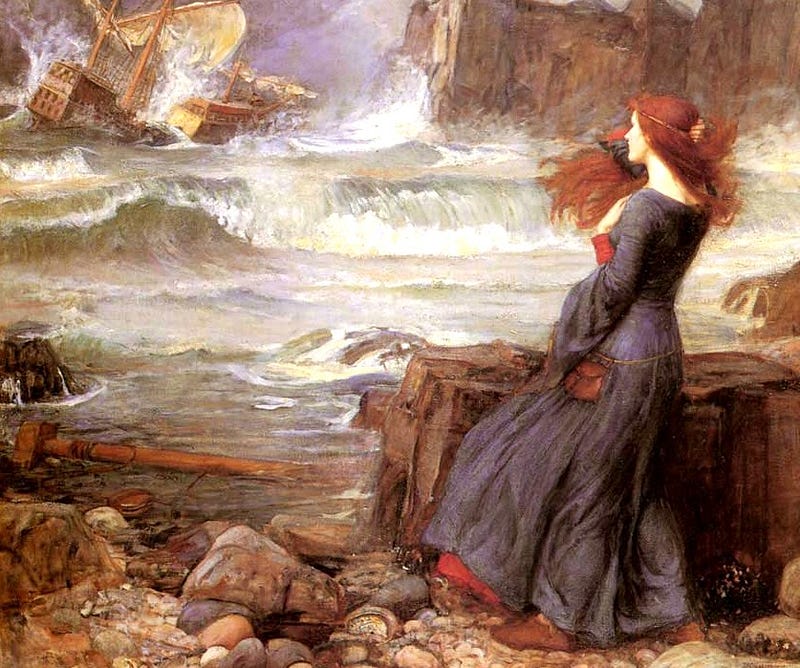
A painting of Miranda looking on the destruction of the King of Naples ship from The Tempest.
“Oh, wonder! How many goodly creatures are there here! How beauteous mankind is! O brave new world, that has such people in ‘t!”

In 2020 the streaming service Peacock released a television adaptation of Brave New World; a dull affair that reduced a seminal work of science fiction to the filming of sexual orgies. The story becoming the vapid, hyper-sexualized trash it once critiqued. More interesting than the show itself is the media response to it.

At Verge Joshua Rivera titled his review “Brave New World has nothing to prove” remarking that the show felt “hopelessly out of date” (Rivera, 2020). He claims the “most damning thing about Brave New World” is that it “never makes a terribly compelling argument for why Huxley’s vision… is relevant today”. We live not enthralled in pleasure, but in misery as his last paragraph remarks:

“Brave New World rings false in the same simple way its novel does now: capitalism just got bigger and more inhumane. Misery is what we’ve optimized and produced at scale. Outrage drives us, and if there is a soma, we probably can’t afford it.” (Rivera, 2020).

Yet the line between pain and pleasure is ever thin. The greater the decadence the stronger the shame, and the stronger the shame the more one wants to retreat into pleasure. The more decadent the pleasure the more weakly self-centered one becomes. Fetishism is the ultimate form of narcissism; the projection of personal pleasure across all reality, the transformation of everything into pornography. Weather the fetish is clothing, features, drawing, submission, or inanimate objects the result is the same. Everyone is reduced to mere stimuli for someone else. What is leveling if not the reduction of whole social orders to stimuli for the fetish of the decline?

At Hollywood Reporter Inkoo Kang proclaims, “There’s no counting the number of crises currently plaguing America, but a hair-raising uniformity and orderliness among its people isn’t one of them.” Kang continues, “And yet here comes Peacock’s Brave New World to warn us of a world in which technology has ensured that there’s too much conformity, too much sharing, too many orgies (more on that soon). If creator David Wiener thought about why Aldous Huxley’s 1932 novel is relevant to 2020, viewers aren’t clued in on the answer.” (Kang, 2020). The issue with the modern world it seems is too much free thought and too little sex. Oh what wonders must await in this brave new era!

At Paste Jacob Oller describes:

“But showrunner David Wiener (Homecoming) has the misfortunate to see his Aldous Huxley adaptation debut during a time when the very real and dangerous concerns of a global populace couldn’t be further from the tenets listed during the show’s opening moments: “No privacy. No family. No monogamy.” Orgies all the time, sci-fi healthcare, and guaranteed employment? Brave New World’s bad timing is the least of its flaws, as the AAA series from Peacock is a foolish, dull, and cowardly take on a literary classic.” (Oller, 2020).

It seems many journalists cannot seem to understand the dangers of a populous controlled through pleasure. In 2018 Eva Wiseman wrote the article “Why disaffected young men need more pornography” for GQ. When faced with a generation where “53 per cent of 11- to 16-year-olds have seen explicit material online”, young people having warped views of sex from porn, and destruction of people’s relationships Wiseman can only muse, “Instead of accepting that our brains can’t deal with the future and switching the internet off, shouldn’t our response be to “rewire” our brains?” The cure is simple “[m]ore porn, from as many perspectives as possible”, “[m]ore conversation about sex at a younger age”, and “more stories of sex from a greater variety of viewpoints” (Wiseman, 2018). What Wiseman forgets is that humans made the machine and can turn it off at any time they just lack the will not too. What is really wanted then is for humans to rewire themselves to love their destructive pleasure seeking; if you can’t feel guilty about your sins are they even sins? Wiseman leaves us off with one final anecdote:

“In The Butterfly Effect, Ronson meets a porn producer commissioned to make a video of a woman sitting on the floor, saying into the camera, “You are loved.” Porn is so ubiquitous it has gone beyond sex and into therapy.” (Wiseman, 2018)

In a world of endless pleasure even normal human relationships are fetishized.

References

Rivera, J. (2020, July 16). Brave New World has nothing to prove. The Verge. https://www.theverge.com/21327442/brave-new-world-review-peacock-nbc https://web.archive.org/web/20200716193113/https://www.theverge.com/21327442/brave-new-world-review-peacock-nbc

Kang, I. (2020, July 14). ‘Brave New World’: TV Review. The Hollywood Reporter. https://www.hollywoodreporter.com/tv/tv-reviews/brave-new-world-review-1303112/ https://web.archive.org/web/20210613170242/https://www.hollywoodreporter.com/tv/tv-reviews/brave-new-world-review-1303112/

Oller, J. (2020, July 13). Peacock’s Brave New World Is a Mishandled Orgy of Bad Ideas. Paste. https://www.pastemagazine.com/tv/peacock/brave-new-world-tv-show-review/ https://web.archive.org/web/20210226102259/https://www.pastemagazine.com/tv/peacock/brave-new-world-tv-show-review/

Wiseman, E. (2018, November 12). Why disaffected young men need more pornography. GQ. https://www.gq-magazine.co.uk/article/young-men-pornography https://web.archive.org/web/20210612163548/https://www.gq-magazine.co.uk/article/young-men-pornography

Why Vox (and Everyone Else) Pretends to Hate Elites

No one in the political elite actually hates the concept of elites not even Vox in one of their videos called Why Tucker Carlson Pretends to Hate Elites. The central thesis is that popular Fox News commentator, Tucker Carlson, is a false prophet leading the poor working class away from the real party of the people, the Democrats, away to the corporate capitalist Republican oligarchs. While yes Tucker Carlson is rich, so is Noam Chomsky for that matter, and so is Vice too. In fact Vice just got $200 million dollars from Comcast:

To wit: Vox Media announced Wednesday a $200 million round of funding from NBC Universal. Vox had previously raised $100 million in funding, including from the venture arm of NBC Universal’s parent company, Comcast (CMCSA, -1.25%). Other Vox investors include Accel Partners, Allen & Company, General Atlantic, Khosla Ventures and Ted Leonsis, the former AOL executive. Its most recent round was a $46.5 million raise last fall at a reported valuation of $380 million.

The latest round values Washington, D.C.-based Vox Media at $850 million, according to the Wall Street Journal. Including the venture funding, Vox Media now is officially a startup “unicorn” worth more than $1 billion.

In other news popular left wing media outlet Vice also just got:

The company’s new debt financing was led by 23 Capital, a financing firm focused exclusively on sports, music and entertainment sectors, with participation by Soros Fund Management, Fortress Investment Group and Monroe Capital, as first reported by the Wall Street JournalFriday.

With this capital investment, Vice’s growth plans can be accelerated, allowing us to execute our new leadership’s strategic vision for the company,” a Vice rep said in a statement… he Brooklyn-based youth-culture company, launched 25 years ago as a punk-culture magazine in Montreal, was valued at $5.7 billion less than two years ago. Since then, its valuation has dropped: Disney disclosed a $157 million write-down on its Vice equity stake last year. Vice previously raised about $1.4 billion from investors including TPG Capital, which plowed $450 million into the company in the summer of 2017.

This is odd; why are Vox and Vice, the real speaker of the people, raising billions of dollars from elite capitalist investors? Also what about this George Soros guy? With $250 million dollars to blow he must be rich, but I mean a rich guy like that surely can’t be a supporter of the party of the people. Lets take a look at his website:

George Soros has been a prominent international supporter of democratic ideals and causes for more than 30 years. His philanthropic organization, the Open Society Foundations, supports democracy and human rights in more than 100 countries.

If you scroll down a little further you see this interesting article called A Worldwide Movement for Domestic Workers:

Despite the profession’s growing ranks, millions of domestic workers — 80 percent of whom are women — remain impoverished and exploited. In many countries, in fact, legal norms don’t provide domestic workers with the same rights and protections that other workers already enjoy.

Thankfully, more domestic workers than ever — including people like Phobsuk “Dang” Gasing, a Thai domestic worker and union leader in Hong Kong, who is featured in this video — are coming together and forming unions.

It’s a global movement, too: Gasing’s union is part of the International Domestic Workers Federation, a collective which boasts more than 500,000 members in 54 countries. The federation has helped ratify international labor standards for domestic workers in more than 28 countries.

Interesting, here we have an elite rich man claiming to be the voice of the people, and a media outlet of the people that is worth $1 billion dollars. Why is it then, that when Tucker Carlson claims to be speaking for the common man he is implanting “false consciousness”, but when George Soros and Vox do it they are legitimate? Is it because they claim to support the common man? Well Tucker Carlson also claims to support the common man, so that doesn’t help much. Maybe it has something to do with the parties they support? So what if George Soros and Vice are “elites” they support the Democrats, the party of the people, why would real elites support the party of the people? Lets look at some of the Democratic candidates then.

Here is an Obama campaign video, a video on the Hillary Clinton campaign, and an official Bernie Sanders campaign video contrast it with this video on Bernie Sanders.

What are these candidates of the people doing be supported by major celebrity elites? Well maybe these are good elites, and there are lots of bad elites supporting the Republican party. Lets look at Republican candidates then.

Here’s a list of celebrities who support Trump, but here’s celebrities bashing Trump at one of the biggest award shows of the year. Here’s a list of celebrities who support Ted Cruz, but here a bunch of celebrities cheering for his opponent, Beto. Here’s a list of celebrities that supported Ron Paul in his run, but that support didn’t travel to his son, Rand Paul.

It seems both the Republicans and Democrats have elite support, but there is a certain disparity in that support. It seems less notable celebrities support the Republicans (in fact some nerds like Paul Ryan can’t even make one single friend), while the elite of the elite support the Democrats, but again this proves nothing. Celebrities are elites, but they got to where they are through skill and hard work. They aren’t like those evil capitalist businessmen who exploit the common man to become elites, so if we are following Vox’s thesis this must mean capitalist businessmen support the republicans. Here is the richest man in the world, Jeff Bezos, saying the minimum wage should be raised to $15 dollars an hour:

Still, in a country with a federal minimum hourly pay of $7.25, Amazon’s actions can be considered progressive.

“Today I challenge our top retail competitors (you know who you are!) to match our employee benefits and our $15 minimum wage,” Bezos writes. “Do it! Better yet, go to $16 and throw the gauntlet back at us. It’s a kind of competition that will benefit everyone.”

Why would the richest man in the world be supportive of progressive policy? This other line in the article illuminates a little:

Amazon moved to a $15 minimum wage in the United States at the end of last year — though it did so with cuts to benefits and stock grants that meant some employees would end up being paid less, which then led Amazon to announce a further boost in pay to rectify the situation.

You can put two and two together. Yet again, this proves nothing though. Jeff Bezos is probably just pretending to be progressive to hide his companies horrible working conditions. Let’s look at some other companies then.

Here’s an article titled It’s True: Tech Workers Overwhelmingly Support Democrats in 2018:

WIRED analyzed more than 125,000 contributions made to federal candidates in 2018 by employees of Amazon, Apple, Facebook, Google, and Microsoft, using data from the US Federal Election Commission. Our not-shocking finding: Tech workers overwhelmingly support Democratic candidates. As you can see below, just over 1 percent of the $15 million sent to candidates went to Republicans, while 23 percent of the funds went to Democrats…The largest recipient, ActBlue, a fundraising platform for progressive candidates, has collected nearly $1 billion for the 2018 election season, according to the Center for Responsive Politics; that money has gone to campaigns for individual candidates, Democratic party fundraising committees, and progressive groups like Emily’s List.

This is not to let Republicans off the hook though; I mean $15 million is nothing to scoff out, but an interesting pattern is emerging. According to Open Secrets in 2016:

We the Democrats universally raised more money then the Republicans, but these numbers seem surprisingly close if one side was the side of the common and the other of the elites.

Compare this to 2018:

The Republicans raised more then the Democrats, but again these numbers are surprisingly close. Who is party of the people of the people then? Both of these seem like parties of the elite with slightly newer elites leaning blue. The thing is though none of this matters.

Vox talked a lot about a cute little Marxist term known as false consciousness. According to the Encyclopedia Britannica it means:

False consciousness, in philosophy, particularly within critical theory and other Marxist schools and movements, the notion that members of the proletariat unwittingly misperceive their real position in society and systematically misunderstand their genuine interests within the social relations of production under capitalism. False consciousness denotes people’s inability to recognize inequality, oppression, and exploitation in a capitalist society because of the prevalence within it of views that naturalize and legitimize the existence of social classes.

In simpler terms it is simply that the evil capitalist trick the proletariat into thinking capitalism is good for them; usually by blaming capitalism’s failures on other issues. The irony of Vox using this term should be obvious. Despite my dislike of communism I think false consciousness is exactly what Vox is doing. Throughout the video they repeatedly suggest the Republicans are the party of the elite while the Democrats are the party of the people, which I’ve shown is entirely false.

The whole purpose of “elite baiting” is to stop you from thinking critically. Instead of actually considering things like for instance Republican supply side economics vs. Democrat demand side economics, or any other policy for that matter. Instead you are told that the Republicans are evil elites so nothing they say is of value and if they say anything reasonable it is just elite lies. The exact same thing can be said of Tucker Carlson and his rants about the elite. Why is this? Elites are probably smart and who knows maybe they say something correct every once and a while, or maybe they don’t. You can’t know until your educate yourself.

This “elite baiting” is prefaced on the illusion that one side of America is for the people while the other is for the elites, but for every George Soros there is the Koch brothers and for every Tucker Carlson there is a Noam Chomsky. If elites are telling you to fight other elites; your probably going to end up a dog to them. Your either being told by the elite elite to destroy the lesser elites to secure the elite elite homogeneous power (High-low vs the middle) or your being told by lesser elite to destroy the elite elite so the lesser elite can gain power (Low-middle vs the high).

Next time someone starts telling you not to listen to X side because it is full elites just listen to them anyway. Develop your own opinion by listening to all sides and remember most political movements are lead by some faction of elites; “grassroots” activism is just a rhetorical strategy to divert the discussion away from actual ideas.

Video Games, Capitalism, and Corporations

I just saw an interesting YouTube video called: DOOM Eternal, Counterculture, and How We Talk About Labor. The thesis was quite simple, the original Doom was counterculture while Doom 2016 (and by extension modern triple A gaming) are little more then disposable, sanitized corporate products. Rather then being the passion product of a small dedicated team modern games are the soulless husks made by corporate interests forcing workers to slave away. Let’s just ignore the fact that one of these games can be programmed on a calculator and one is a large complex blockbuster that requires a range of diverse skill sets to complete.

Ti-83 a real gaming beast

While there are many other aspects of the video that I could talk about: like his weird rant on the sheeple gamers for cheering at new Doom trailer or how he complains that Doom Eternal is just Doom 2016 with more stuff; exactly what the original Doom 2 was. I’m more interested in how the central thesis — the original Doom was good because it was a passion project; Doom 2016 was less good as it was corporate product — and how this relates to how we view art under capitalism.

1993 vs 2016

First we need to ask what makes the original Doom more artistic or “punk” the Doom 2016. Both games have the same gory satanic aesthetic, both games are high octane first person shooters (with the kind of game play changes you’d expect from a game over 20 years ago), and both games are unrelentingly hyper violent. The first difference brought up is the reception both games received. The original Doom was a mass phenomena it was one of the best selling (it has basically been released on almost every game console) and most influential games of all time. It was also met with controversy during the height of its popularity due to the ongoing fear of video game violence on the youth; this lead to the game having an edgy, underground vibe Doom 2016 couldn’t generate. However this has nothing to do with the actual content of the games themselves, Doom 2016 was just as if not more violent then the original. I guarantee if Jack Thompson still had cultural influence the game would have been just as controversial as the original. The issue here isn’t the actual content of the game but a changing societal consensus in violence.

The creator also brings up the argument is that in the original Doom you could you feel the creative finger print of all the designers but in Doom 2016 you couldn’t. Which makes sense when you consider having a team as large Doom 2016, as if everyone left their fingerprints on the game it would leave the game feeling aimless and conflicted. Leaving the creative direction in the hands of a few people then seems like the best decision so the game can maintain a cohesive creative vision, but the truth is none of these arguments actually matter.

The real difference between the original Doom and Doom 2016, the one that actually matters to the creator, is that one was produced by a large company while one was made by a small team. If Doom 2016 was the exact same game but made by a smaller studio he would have liked it more, and if Doom 2016 had been made exactly like the original Doom he would have disliked it by virtue of being made by a corporation.

What matters here is not the actual content of the game but who makes it; which is to say what is perceived as authority. Nothing about the original Doom makes it more countercultural then Doom 2016 other then that one was made by “authority”. Some may object and point out that ethos does really matter to an argument. A corporation saying fuck capitalism comes off as kitsch and disingenuous while a group of young revolutionaries saying the same thing comes off as bold and brave, so while authority may be able to dress itself in the image of counter culture it can’t recreate the fundamental feelings of the movement. I again however, point out that this doesn’t fundamentally alter the content of both messages being said. If said corporation wrote a well thought out and well argued critique of capitalism would it truly be worse then some random revolutionary yelling “fuck the system” by the simple vice of lacking authenticity?

The actual discussion of labor and capitalism in this video makes up a very small portion of the video because it doesn’t matter. The focus is primarily on the nostalgia the creator has for the original Doom. Doom then was a controversial, violent, and mysterious phenomenon, but do to years of media desensitization Doom 2016 would lack that same edge. I wouldn’t be surprised if in the future someone makes a video on how Doom 2016 was real Counter culture while Doom 2023 is just corporate trash.

What we see is not the attack of corporations on art but the attack of time on nostalgia. Doom 2016 could never live up the original Doom because I doubt anything even could. After years of violent media nothing could match up to the original sense of wonder the original held for many who played it. Capitalism simply serves as a easy explanation because it offers a solution to the problem. All the problems could be solved if got rid of those bad corporations and consumerism then video games could be truly good again like the good old days of the original doom. What matters here is not the structure of capitalism itself, but of any power structure to serve as a convenient scapegoat. If Doom 2016 had been made by the government ministry of video games the complaint would be that socialist bureaucracy was ruing video games.

One last interesting thing about this video comes near the end, where Michael Saba describes that he is less interested in bland blockbuster games while thumbing down the highly praised God of War on Ps4. I actually agree with that sentiment as God of War was a dull, oscarified blockbuster “experience” that is just smart enough to seem deep but isn’t complex or edgy enough to not have mass appeal. The issue here however, isn’t corporations dumbing down art for a wide audience, but the audience wanting to seem smart.

This isn’t as much the lack of depth but the lack of encoded depth. Rather then having complex themes encoded within metaphors and cultural mimetic imagery; themes are laid bare and made to be as consumable as possible. This gives the illusion of depth as the themes are obvious after one or two views rather then requiring lots of thought to truly understand. I call this process “realism” as Lyotard describes in The Postmodern Condition:

The challenge lay essentially in that photographic and cinematographic processes can accomplish better, faster, and with a circulation a hundred thousand times larger than narrative or pictorial realism, the task which academicism had assigned to realism : to preserve various consciousnesses from doubt. Industrial photography and cinema will be superior to painting and the novel whenever the objective is to stabilize the referent, to arrange it according to a point of view which endows it with a recognizable meaning, to reproduce the syntax and vocabulary which enable the addressee to decipher images and sequences quickly , and so to arrive easily at the consciousness of his own identity as well as the approval which he thereby receives from others- since such structures of images and sequences constitute a communication code among all of them. This is the way the effects of reality, or if one prefers, the fantasies of realism, multiply. (Pg.74)

…Realism, whose only definition is that it intends to avoid the question of reality implicated in that of art, always stands somewhere between academicism and kitsch. When power assumes the name of a party, realism and its neoclassical complement triumph over the experimental avant-garde by slandering and banning it-that is, provided the “correct” images, the “correct” narratives, the “correct’’ forms which the party requests, selects, and propagates can find a public to desire them as the appropriate remedy for the anxiety and depression that public experiences. The demand for reality — that is, for unity, simplicity, communicability, etc.-did not have the same intensity nor the same continuity in German society between the two world wars and in Russian society after the Revolution : this provides a basis for a distinction between Nazi and Stalinist realism. What is clear, however, is that when it is launched by the political apparatus, the attack on artistic experimentation is specifically reactonary : aesthetic judgment would only be required to decide whether such or such work is in conformity with the established rules of the beautiful. (Pg. 75)

So here we see “realism” defined as a desire for clarity, communicability, and familiarity in theme. Rather then corporations dumbing down it is actually the phillistinian pseudo-intellectual desire for “realism” that has caused the stagnation of art in games; something that can be seen in both the the indie and triple a market.

The thing most of these “capitalism kill art” arguments forget is too separate capitalism from the emergence of a mass consumer market. While companies may pander to pop culture there is no guarantee that the fundamental tastes of people would change if consumerism or capitalism were removed. The consumer tastes may very well stay the same, so the socialist ministry of media may just keep giving them what they want. It is not like work will stop and people will always want something to take their minds of the universal struggles humanity faces.

Punked: Discourse in America

While browsing the internet I came across an interesting old blog called The Last Psychiatrist and one post particularly stood out: Fox & Friends Punked by Obama Supporter. The video itself is nothing special; a man just spouts nonsense during a Fox News interviews and reveals later he’s an Obama supporter in an interview:

the man who pranked Fox News said he’s always believed “Fox News is a fake news organization,” and explained that he wanted to shame the conservative television channel for being “stupid” and looking for interview subjects as if they were “casting a part in a show.

A real joker

The whole “prank” itself is quite unremarkable and is only really interesting in it’s childishness. It is simply antagonism for the sake of antagonism.

Yet besides this point I think this video is an interesting sign of things to come. Anyone that has spent any extended time on YouTube will probably have been recommended a video in the “Rekted” genre of political videos. These videos typically feature one or many short clips of various political opponents getting corrected or “roasted” by someone: usually a popular political pundit.

The videos started in 2015 and exploded in 2016 with titles like: “(REKT) Best of Ben Shapiro! Ben Shapiro TRIGGERS Feminists, Liberals, SJW, Snowflakes! Mic Drop 2017”, “Feminist Cringe Compilation #2”, or “feminists get destroyed by one man”. In recent years the subject matter the subject matter has expanded into videos like: “Dumb Republicans Compilation”, “Anti-SJW Cringe Compilation”, and “Libertarian Cringe Compilation (the end will make your eyes bleed)”.

Very rational

The content of these videos are all almost identical in that no point is actually made in any of videos. Rather then being a two sided debate or discussion they serve as a purely one sided afar where one side is assumed to be right and therefore must use “logic” to destroy all opponents. In this quick culture the actual discussion or debate between two ideologies is replaced by a quick slap down culture where nitpicks and insults replace understanding.

The short length of the clips also helps to facilitate the narrative that the side in question is the “right” one. It doesn’t matter if you utter botched most of a debate when one five minute clip of you correcting an opponent with facts is what goes viral. With this style of smackdown a short length is preferred as it allows you to take a potshot before running away. If the kid in the “Fox and Friends PUNKED” video had actually stayed on the program who knows what other points he could make to the reporter besides “Haha I’m actually an Obama supporter”. As TLP points out:

Imagine Gretchen Carlson doing what she should have done if she was smart: kept the interview going longer. “Oh, I’m sorry, Max, we must all be dummies here at Fox because when you told us you were pro-Romney we… just believed it. We do that with the Bible and pre-war intelligence, too, gosh golly. Well, you have a Columbia education and I’m giving you a national platform, why don’t you tell us why we’re all stupid here for supporting Romney? Why should we want Obama for a second term? Please, no soundbites you got from twitter.” As the kid’s head melts like he was staring into the Ark of the Covenant we’d see clearly that he isn’t an Obama supporter at all. He may be voting for Obama, I have no idea, but he wasn’t there for Obama, he was there for himself under the pretense antagonizing Fox, which is why his main argument was “s’up.” Advice for aspiring comics like Max: if you get to go on TV, you should probably prepare some material.

This strange trend represents one fundamental truth about politics which is that antagonism is more important then agreement or understanding. The best thing a politician can do is simply get you to hate the other side; it’s quite telling that most political ads are attack ads rather then telling you why you should vote for them. As TLP points out:

Note, however, that the key antagonism here isn’t between Romney’s ideas and Obama’s ideas, or even Romney and Obama, but Romney supporters and Obama supporters. This is textbook contemporary political debate: attack people you hate. The college kid doesn’t like Obama, he just hates Romney supporters. And Gretchen Carlson doesn’t like Romney, she hates Obama supporters. The debate isn’t the point — indeed, you are not supposed to see how similar they are — the hate is the point. The candidates themselves are interchangeable.

This is best represented in the culture war narrative that has been peddled recently that America is trapped in some civil war between two radical factions. However this narrative is just that a narrative. As political scientist Morris Fiorina has pointed out our country is just as divided as it usually is; which is not much. Most people agree on moderate policies and 40% of Americans identify as independent a far cry for the supposed radical majority that we hear about. Instead what see is that parties themselves and the political class have become sorted. The democratic party is now homogeneously liberal and the Republicans are homogeneously conservative. This goes for other members of the political class: activists, donors, and partisan reporters. A more optimistic commentator may simply view this narrative as the result of the political class unintentional projecting their beliefs onto the general population. While a more cynical one may see this as a deliberate way to stroke fear and hatred.

Not as polarized as it may appear

This “culture war” narrative is exactly what pushes these kind of “rekted” videos with the assumption that one side is becoming more radical while the other is sane and rational. In these videos radical members of the political class are paraded around as the norm when in reality they are a minority. Most liberals aren’t blue haired gun-snatching socialist radical feminists and most conservatives aren’t evangelical gun-toting free-market crypto-fascists, but if you believe the other side to be nothing but radicals then you have to do everything in you power to stop them; even if it means voting for someone considered the “lesser of two evils”.

Who cares what a politician is doing besides the fact that oppose the bad guys? If you can convince people that your opponents are radical beyond reason then all you have to do is make yourself seem slightly less radical in comparison. This also produces a cycle of violence and fear. If you think America is being over run by Nazis well then you’d want to protest and “Make Nazis Afraid Again”, so you start preforming increasingly violent protests in order to counter single the growing radicalism. This then catches notice of other right wing commentators who then exaggerate the radical protesters in order to make their base feel the need to counter signal with increasing intensity in order to fight their perceive radical threat, and thus the cycle continues.

Divided we fall

Politicians and the people who support them know that fear can be used to shield themselves from criticism while turning public outrage too their opponent. If you can convince people that some irrational threat exists they will support anyone who opposed that threat without question. There were people who supported Trump just to “trigger the libs” and third parties and independents have been scolded consistently for letting the “fascist Trump” win. Once you’ve been convinced the other side is irrational beyond repair you’ve already bitten the bait and have started playing the game.

When people are people are afraid of ideas they become afraid of people. People who are afraid are divided and pitted against one and another. We can lie to ourselves and say it’s just that others are just garbage human beings; we can pretend that we are morally superior and more intellectual then everyone who disagrees with, but when we pit ourselves against our fellow man who is really being punked?